Buy ggbet.eu ?
We are moving the project
ggbet.eu .
Are you interested in purchasing the domain
ggbet.eu ?
domain@kv-gmbh.de · 0541-91531010
Buy ggbet.eu ?
How do I disable mouse acceleration for gaming?
To disable mouse acceleration for gaming, you can go to your computer's settings and navigate to the mouse settings. Look for an option to disable mouse acceleration or enhance pointer precision and uncheck it. Additionally, you can also use third-party software or gaming mouse software to customize and disable mouse acceleration. Once disabled, your mouse movements will be more consistent and predictable, which can improve your gaming performance. **
How can one convert acceleration to Earth acceleration?
To convert acceleration to Earth acceleration, one can use the formula: Earth acceleration = acceleration / 9.81 m/s^2. This formula is derived from the fact that Earth's gravitational acceleration is approximately 9.81 m/s^2. By dividing the given acceleration value by 9.81 m/s^2, one can determine how many times greater or smaller the acceleration is compared to Earth's gravitational acceleration. This conversion is useful for comparing accelerations in different contexts to the standard acceleration due to gravity on Earth. **

Similar search terms for Acceleration
Top-Angebote
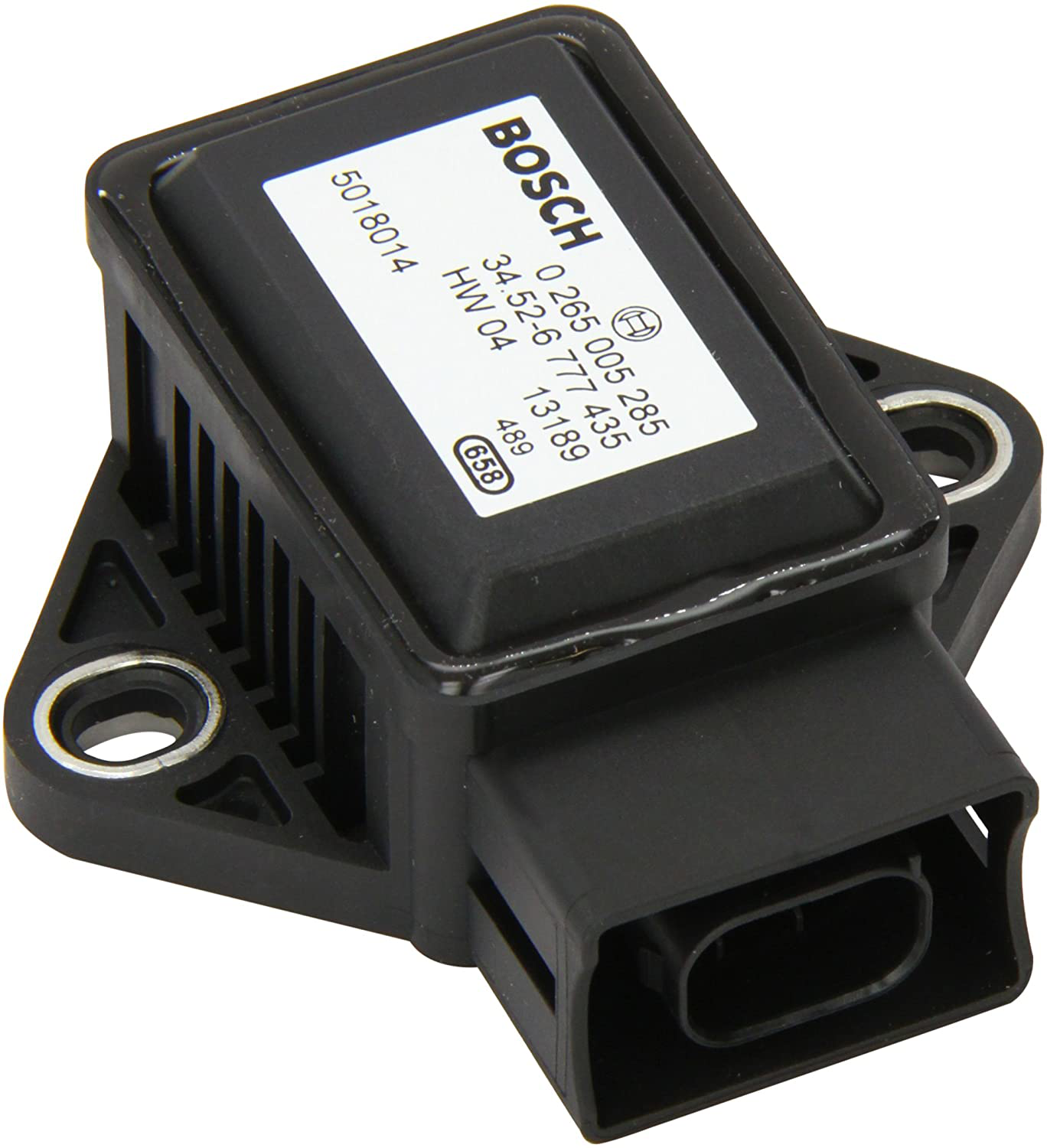
Products related to Acceleration:




-
How can one convert acceleration to Earth's acceleration?
To convert acceleration to Earth's acceleration, one can simply divide the given acceleration by the acceleration due to gravity on Earth, which is approximately 9.81 m/s^2. This will give the acceleration in terms of how many times Earth's gravity it is. For example, if a car is accelerating at 5 m/s^2, dividing this by 9.81 m/s^2 will give approximately 0.51 g, where g represents Earth's acceleration due to gravity. **
-
What is the difference between gravitational acceleration and Earth's acceleration?
Gravitational acceleration is the acceleration experienced by an object due to the force of gravity, which is approximately 9.81 m/s^2 on the surface of the Earth. Earth's acceleration, on the other hand, refers to the acceleration of the Earth itself as it orbits the Sun, which is approximately 9.81 m/s^2 towards the Sun. In essence, gravitational acceleration is the acceleration experienced by objects on Earth due to gravity, while Earth's acceleration is the acceleration of the Earth as it moves through space. **
-
What is the difference between tangential acceleration and rotational acceleration?
Tangential acceleration is the acceleration of an object moving in a circular path, and it is directed along the tangent to the path. It is caused by a change in the object's speed or direction. On the other hand, rotational acceleration is the rate of change of angular velocity of an object rotating around an axis. It is caused by a torque or force acting on the object, and it is directed perpendicular to the plane of rotation. In summary, tangential acceleration is related to linear motion in a circular path, while rotational acceleration is related to the change in the rate of rotation of an object. **
-
What is the formula for acceleration in uniform acceleration in physics?
The formula for acceleration in uniform acceleration in physics is given by a = (v - u) / t, where a is the acceleration, v is the final velocity, u is the initial velocity, and t is the time taken. This formula represents the change in velocity over time, and it is used to calculate the rate at which an object's velocity is changing. Acceleration is measured in meters per second squared (m/s^2). **

Is acceleration always constant?
No, acceleration is not always constant. Acceleration is the rate of change of velocity, so if an object's velocity is changing at a constant rate, then its acceleration is constant. However, if an object's velocity is changing at a non-constant rate, then its acceleration will also be non-constant. For example, when an object is thrown upwards, its acceleration due to gravity is constant, but when a car is speeding up or slowing down, its acceleration is not constant. **
Why is there acceleration?
Acceleration occurs when there is a change in an object's velocity, either in magnitude or direction. This change can be caused by a force acting on the object, such as gravity, friction, or a push or pull from another object. According to Newton's second law of motion, the acceleration of an object is directly proportional to the net force acting on it and inversely proportional to its mass. Therefore, if there is a net force acting on an object, it will experience acceleration in the direction of the force. **
Top-Angebote
Products related to Acceleration:
-
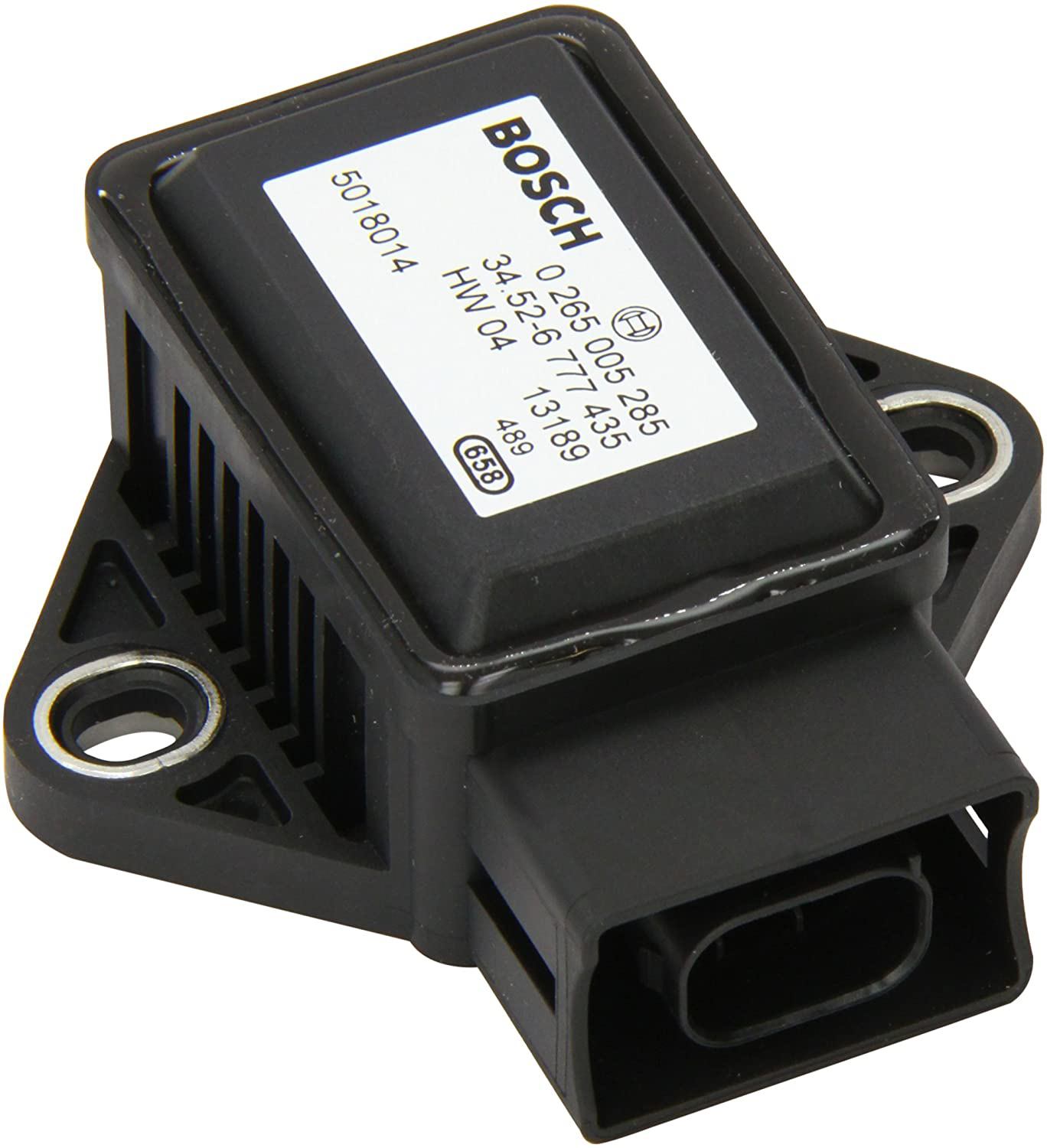
METZGER 09001552 Sensor, longitudinal- / lateral accelerationFitting Position: lateral installation; Fitting Position: Front and Rear, C-Pillar, Rear, Front; Sensor Type: Crash Sensor; Airbag: for side airbag; for PR number: 4X1, 4X3, 0A2; Production date from: 31.05.2010; Production date to: 26.05.2014, 03.11.2014, 03.02.2020, 01.06.2020, 30.11.2015; Model Year to: 2014; Number of Doors: 4; Vehicle Identification Number (VIN) from: 2K-B-200 00164,99 £*Shipping: 8,45 £Secure redirect to the provider
-
METZGER 09001553 Sensor, longitudinal- / lateral accelerationFitting Position: lateral installation; Fitting Position: C-Pillar, Rear, Front, B-Pillar, Front and Rear; Sensor Type: Crash Sensor; Airbag: for side airbag; Production date from: 26.05.2014, 03.11.2014, 25.05.2015; Number of Doors: 4; for PR number: 4X1, 0A2; Production date to: 03.02.202068,49 £*Shipping: 8,45 £Secure redirect to the provider
-
How do I disable mouse acceleration for gaming?
To disable mouse acceleration for gaming, you can go to your computer's settings and navigate to the mouse settings. Look for an option to disable mouse acceleration or enhance pointer precision and uncheck it. Additionally, you can also use third-party software or gaming mouse software to customize and disable mouse acceleration. Once disabled, your mouse movements will be more consistent and predictable, which can improve your gaming performance. **
-
How can one convert acceleration to Earth acceleration?
To convert acceleration to Earth acceleration, one can use the formula: Earth acceleration = acceleration / 9.81 m/s^2. This formula is derived from the fact that Earth's gravitational acceleration is approximately 9.81 m/s^2. By dividing the given acceleration value by 9.81 m/s^2, one can determine how many times greater or smaller the acceleration is compared to Earth's gravitational acceleration. This conversion is useful for comparing accelerations in different contexts to the standard acceleration due to gravity on Earth. **
-
How can one convert acceleration to Earth's acceleration?
To convert acceleration to Earth's acceleration, one can simply divide the given acceleration by the acceleration due to gravity on Earth, which is approximately 9.81 m/s^2. This will give the acceleration in terms of how many times Earth's gravity it is. For example, if a car is accelerating at 5 m/s^2, dividing this by 9.81 m/s^2 will give approximately 0.51 g, where g represents Earth's acceleration due to gravity. **
-
What is the difference between gravitational acceleration and Earth's acceleration?
Gravitational acceleration is the acceleration experienced by an object due to the force of gravity, which is approximately 9.81 m/s^2 on the surface of the Earth. Earth's acceleration, on the other hand, refers to the acceleration of the Earth itself as it orbits the Sun, which is approximately 9.81 m/s^2 towards the Sun. In essence, gravitational acceleration is the acceleration experienced by objects on Earth due to gravity, while Earth's acceleration is the acceleration of the Earth as it moves through space. **
Similar search terms for Acceleration
-
Turtle Beach Burst II Pro Black Wireless Esports Gaming MouseOverview The Turtle Beach Burst II Pro Wireless is a high-performance esports gaming mouse engineered for speed, accuracy, and competitive gameplay. Featuring an ultra-lightweight design, a high-precision 30K DPI optical sensor, and an ultra-fast 8K polling rate, this mouse is built to deliver lightning-fast response times and reliable wireless performance. Designed for serious PC gamers, it combines precision engineering with long battery life to support extended gaming sessions. Key Features • Ultra-lightweight design at approximately 57g for fast movements • Owl-Eye optical sensor with up to 30,000 DPI precision • True 8,000Hz wireless polling rate for ultra-low latency • Titan optical switches rated for up to 100 million clicks • Up to 150-hour battery life depending on polling settings • Dual wireless connectivity including 2.4GHz and Bluetooth • Symmetrical shape suitable for multiple grip styles • Up to 8 programmable buttons for custom controls • Smooth tracking on multiple surfaces including glass • Software customisation for DPI and performance tuning Benefits The Burst II Pro is ideal for competitive gamers who require fast reaction times and precision tracking. Its lightweight build helps reduce fatigue during long gaming sessions, while the 8K polling rate ensures extremely responsive input for FPS and esports titles. With flexible connectivity and long battery life, it is also suitable for users wanting a reliable wireless gaming setup without constant charging. Specifications Specification Details Brand Turtle Beach Model Burst II Pro Colour Black Sensor Owl-Eye Optical Sensor DPI Up to 30,000 DPI Polling Rate Up to 8000Hz Connectivity 2.4GHz Wireless, Bluetooth, USB Buttons Up to 8 Programmable Switch Type Titan Optical Switches Weight Approx. 57g Battery Life Up to 150 Hours Design Symmetrical Usage Esports / Gaming79,98 £*Shipping: 0,00 £Secure redirect to the provider
-
What is the difference between tangential acceleration and rotational acceleration?
Tangential acceleration is the acceleration of an object moving in a circular path, and it is directed along the tangent to the path. It is caused by a change in the object's speed or direction. On the other hand, rotational acceleration is the rate of change of angular velocity of an object rotating around an axis. It is caused by a torque or force acting on the object, and it is directed perpendicular to the plane of rotation. In summary, tangential acceleration is related to linear motion in a circular path, while rotational acceleration is related to the change in the rate of rotation of an object. **
-
What is the formula for acceleration in uniform acceleration in physics?
The formula for acceleration in uniform acceleration in physics is given by a = (v - u) / t, where a is the acceleration, v is the final velocity, u is the initial velocity, and t is the time taken. This formula represents the change in velocity over time, and it is used to calculate the rate at which an object's velocity is changing. Acceleration is measured in meters per second squared (m/s^2). **
-
Is acceleration always constant?
No, acceleration is not always constant. Acceleration is the rate of change of velocity, so if an object's velocity is changing at a constant rate, then its acceleration is constant. However, if an object's velocity is changing at a non-constant rate, then its acceleration will also be non-constant. For example, when an object is thrown upwards, its acceleration due to gravity is constant, but when a car is speeding up or slowing down, its acceleration is not constant. **
-
Why is there acceleration?
Acceleration occurs when there is a change in an object's velocity, either in magnitude or direction. This change can be caused by a force acting on the object, such as gravity, friction, or a push or pull from another object. According to Newton's second law of motion, the acceleration of an object is directly proportional to the net force acting on it and inversely proportional to its mass. Therefore, if there is a net force acting on an object, it will experience acceleration in the direction of the force. **
* All prices are inclusive of VAT and, if applicable, plus shipping costs. The offer information is based on the details provided by the respective shop and is updated through automated processes. Real-time updates do not occur, so deviations can occur in individual cases. ** Note: Parts of this content were created by AI.